

In Rob Reiner’s 1984 “rockumentary” This Is Spinal Tap, one of the main characters, Nigel Tufnel, proclaims they are different than other bands because their speakers “go to ll.”
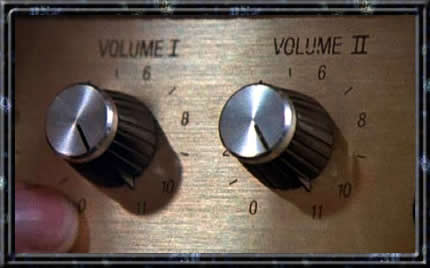
I cannot help but be reminded of good ole Nigel every time I talk to clients who are working on their value propositions. A few claims I’ve heard over the years:
- “We are more scalable”
- “We are truly global”
- “We are more adaptive”
Translation? “We go to eleven”.
I hear those claims and think to myself, “What prevents their competitors for saying the exact same thing?”
Almost every marketing organization I encounter seems to be making a major effort to differentiate or improve their value propositions.
So, what happens?
A bunch of people (mostly a blend of product or solutions people and marketers) have a series of meetings and wordsmith a set of ideas into a few paragraphs and then say, “If we can only get our sales force to deliver this message, we will outsell our competitors”.
Does this ever pan out? No.
Here is an example. Given my META Group (now part of Gartner) heritage, my team knows a lot about outsourcing and continues to advise buyers on vendor selection.
Many of these outsourcers claim they are “truly global” while the others are just globally dispersed. It is almost comical to watch them try to communicate the idea that they are the only provider that is “truly global”. With all of the vendors parroting the same concepts, is it any wonder that the outsourcing market is becoming increasingly commoditized, win rates across the industry are about 30% (or less), and the costs of pursing these opportunities are on the rise?
Don’t laugh. It’s happing in your market too.
Why?
Anything you can say on your website, your competitors can say as well.
Let’s say your value proposition is different than anyone else’s and that you do come up with some concepts that resonate with customers as truly unique and this helps get you traction. How hard is it for your competitors to steal this value proposition, reword it, and use it?
Over the summer, I worked on a large client engagement with other consultants. Michael Tracey (business consultant and Author of Disciplines of Market Leaders), a branding firm, and I were working with a multi-billion dollar vendor on their strategic accounts program. We ran into a lot of problems when we talked about “value propositions.” After much back and forth, we actually discovered there are three levels of message which all must be clearly communicated successfully to produce a value proposition.
- [u]Corporate value[/u] – at a high level, how is your company designed to add value, are you a customer centric organization, have the most innovative products or services, or provide the lowest costs? What evidence can you produce to support those?
- [u]Account value[/u] – so what? Any customer you are trying to sell to have a tremendous variety of different initiatives and ways to part with that money. They all have their own organizational structures and cultures, how can you give your company an identity to that account where they will take your organization more seriously than all of the other options they have?
- [u]Opportunity value[/u] – at the end of the day, customers buy products and services to address discrete problems bounded by a specific scope. While your company can pursue multiple opportunities within any one account, each one must have a clear business case and compelling story to be selected.
Considering these different levels and the need to tailor these messages so they are relevant to a set of people within a given account, perhaps there is a better way to approaching value proposition development. Why not create an inventory of “reference value statements” which are designed specifically to be combined and modified based on the needs of a given account, and create simple tools to allow sales people to configure the right set of messages for a given customer’s requirements? As B2B companies retool their sales models from product-centric to solutions-selling engines, you need to evaluate all legacy back-office processes as well. A logical place to start is where the rubber meets the road – the conversations your sales people have with their clients and prospects.



I couldn’t have said it better! I’ve been working with sr. management in marketng roles for almost 20 years and I’m amazed that I must SELL this concept OVER and OVER and OVER! When will Senior Executives get it?